Takeaways from California MBA Innovators 2026
Where the real cost savings in mortgage are hiding, and why the next 24 months matter
June 6, 2026 by Brianna Lin
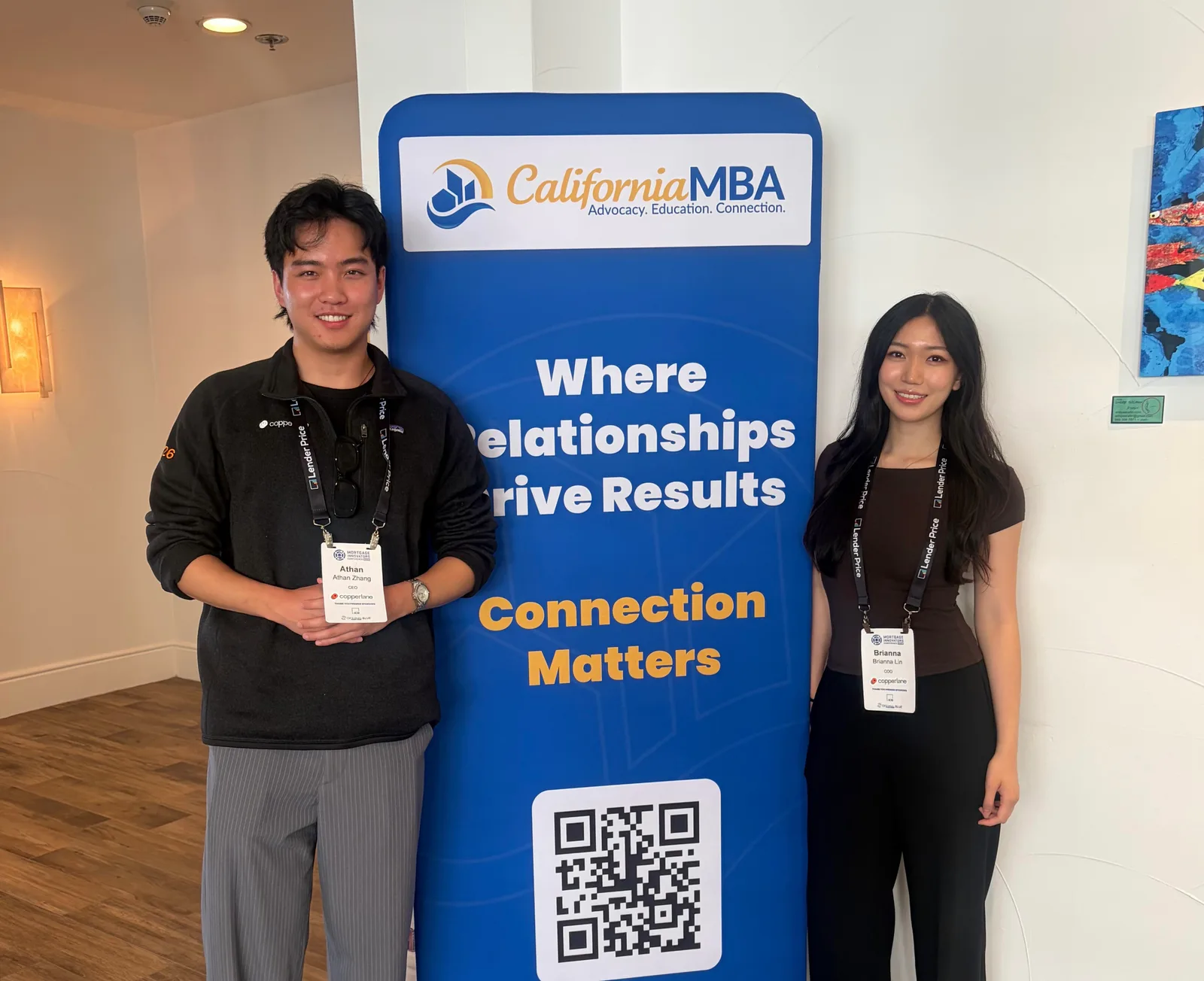
We spent three days in Los Angeles for the California MBA Mortgage Innovators Conference, with a stop at the MBA's mPower event. We came back to San Francisco with a full notebook and a clearer picture of where AI actually pays off in lending.
Here are the takeaways that stuck:
Self-Regulate or Get Regulated
The industry has a choice: regulate itself, or wait to be regulated.
Lenders and vendors who build governed AI workflows now will help define what compliance looks like in five years. The ones who wait will have the rules written for them. MISMO's risk framework is a good place to start.
This is not a reason to slow down on AI. It is a reason to be deliberate about it. Careful now beats a sledgehammer later.
A Role Is a Bundle of Tasks, Not a Job
A processor is not a job. It is a bundle of tasks. That distinction is the difference between lenders who get real ROI from AI and lenders who buy tools and watch nothing change.
Point AI at a "role" and you get a demo. Point it at the specific, repetitive tasks inside that role and you get results. The lenders capturing value are the ones doing the unglamorous work of breaking jobs down into tasks and automating the right ones.
The Cost-to-Originate Gap Is Operational
The spread in cost to originate is staggering. Top performers are closing loans at $6,000 to $7,000. The worst are at $17,000. Same regulations, same borrowers, same product.
The gap is not regulatory. It is operational. Whoever closes it with AI over the next 24 months is going to take real market share. That was the most concrete opportunity we heard described all week.
The Cheapest Error Is the One You Catch Early
Most mortgage costs do not come from big failures. They come from small unforced errors early in the process that compound over time. A missing document or a wrong data point costs far more on day 20 than it would have on day 2.
The best lenders are shifting decisions earlier. They verify income upfront, run compliance checks early, and flag fallout risk before it gets expensive. The goal is not to replace underwriters. It is to make sure underwriters only touch the decisions that need human judgment, with everything else validated and organized before the file reaches them.
Where Penny Fits In
This is the problem we are building Penny to solve.
Loans die in the back-and-forth between borrowers, LOs, processors, and underwriters, and lenders are tired of stitching together fragmented tools. Penny works to shift left: she catches missing data, validates documents, and resolves issues before files ever reach underwriting. She does not replace your staff. She clears the redundant work so loan officers can focus on what they do best, selling and keeping borrowers happy.
Comparing Notes
Every conversation pointed at the same thing. Lenders want fewer tools, fewer errors, and more time on the work that actually needs a person.
Thank you to everyone who shared what is working and what is not. If you are a broker or lender thinking about where to start with AI in 2026, we would genuinely like to compare notes.